Pest Control Service Oklahoma City provides targeted insect eradication through scientific precision, eliminating active infestations across residential dwellings, agricultural properties, and commercial facilities. Property owners dealing with wood-destroying organisms, sudden indoor foraging lines, or recurring stinging swarms receive structural triage backed by localized entomological assessments.
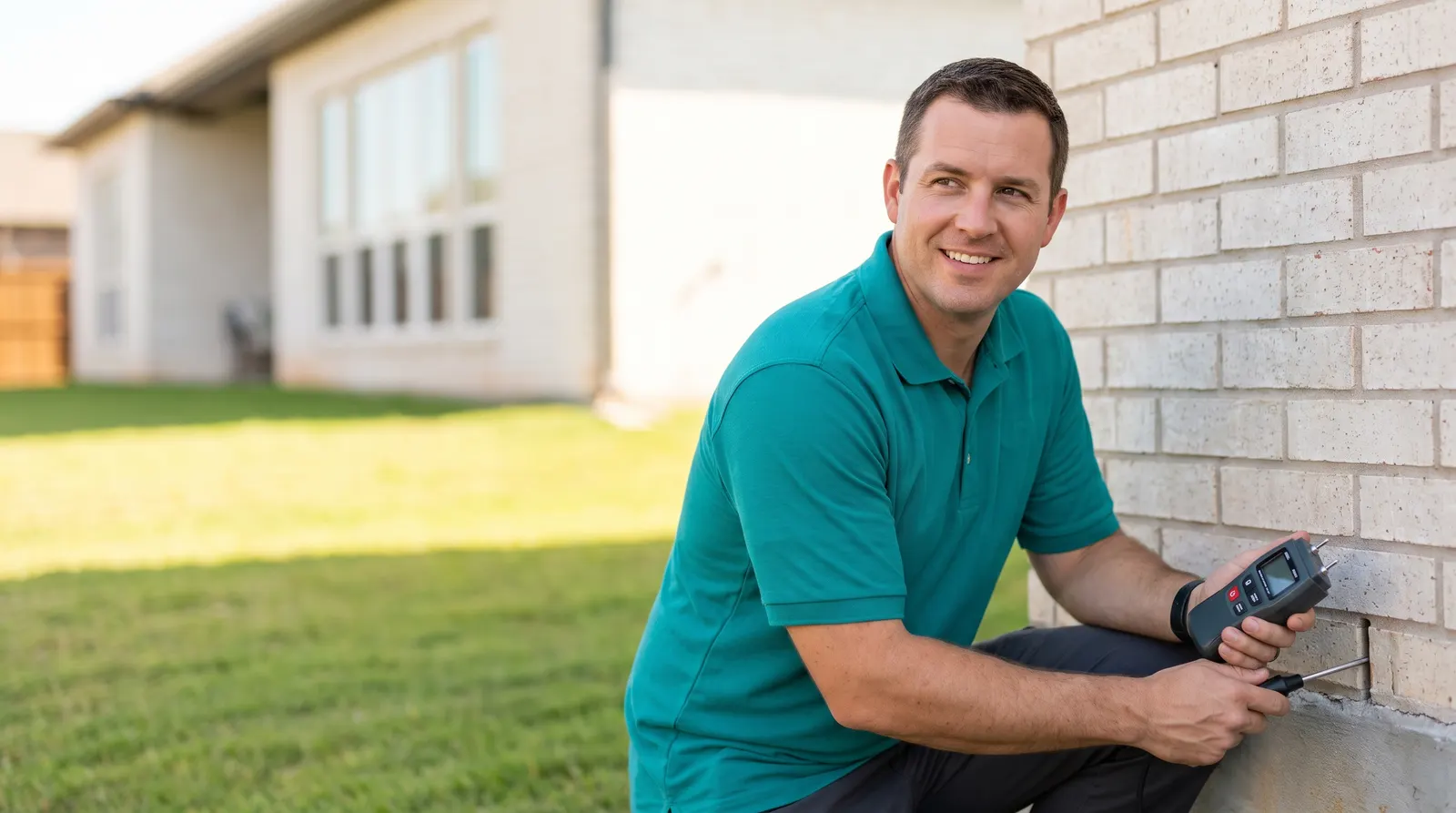
A professional pest control service in Oklahoma City is an entomological inspection, structural exclusion, and targeted chemical eradication process designed to eliminate wood-destroying insects, fabric pests, and disease-carrying arthropods from residential and commercial structures.
Every service reflects the same meticulous attention to detail, whether it's a single job or a larger pest control service project across Oklahoma City.
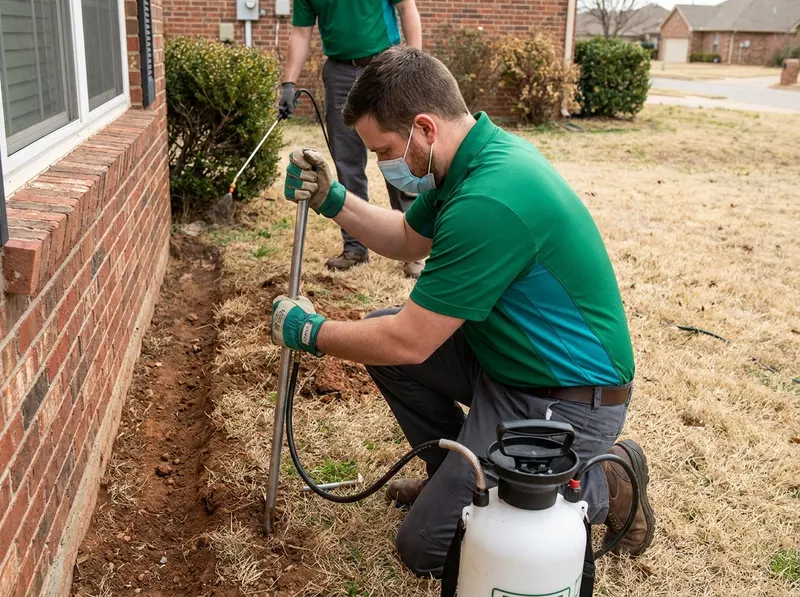
Subterranean termite management utilizes liquid non-repellent termiticide barriers trenched into foundation perimeters alongside targeted sub-slab injections. Liquid active ingredients create an undetectable continuous zone that foraging worker termites pass through freely, transferring lethal active chemistry back to the subterranean reproductive queens through grooming and mutual trophallaxis. Technicians treat continuous foundation trenches 6 inches wide and 6 inches deep around exterior stem walls, alongside horizontal pressure drilling of attached concrete slabs, front porches, and garage aprons. Applications along porous foundation blocks, expansion joints, and utility penetrations protect load-bearing sill plates and structural timbers from chronic cellulose digestion. Detailed post-treatment inspections evaluate soil saturation levels and thermal integrity to confirm complete chemical uptake throughout the perimeter barrier zone.
Get a quote →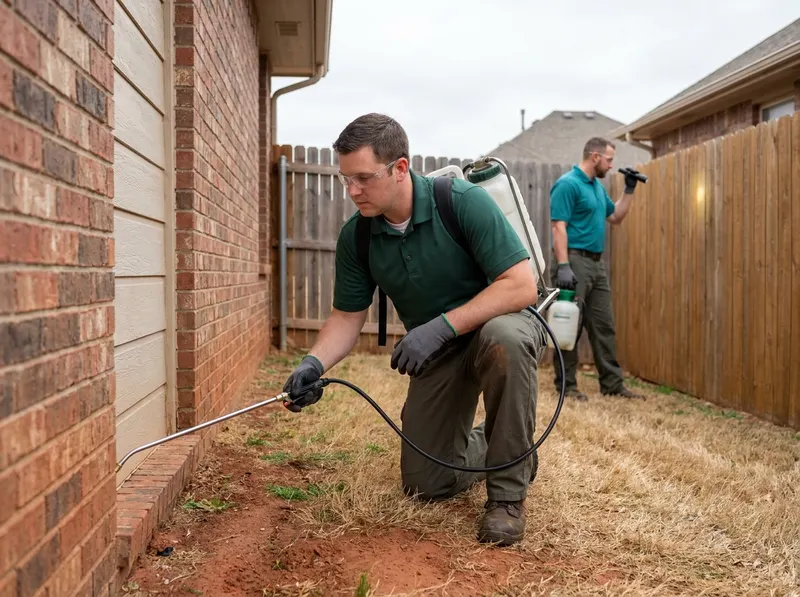
Carpenter ant eradication targets parent colonies located in exterior moisture-damaged wooden framing as well as satellite nests tucked inside insulated wall spaces, flat roofs, and floor joists. Treatment procedures combine pressurized micro-dusting of wall voids using micronized desiccant agents with delayed-action perimeter transfer sprays containing fipronil or chlorfenapyr. Technicians map exterior foraging trails along roof eaves, foundation transitions, utility lines, and damp structural wood without disturbing interior sheetrock unnecessarily. Subfloor visual evaluations and acoustic tracking isolate satellite galleries near bathroom water leaks or condensation-prone window headers. By allowing worker ants to carry non-repellent transfer residues back into the primary wood cavities, the treatment collapses the reproductive queen without requiring widespread invasive structural demolition.
Get a quote →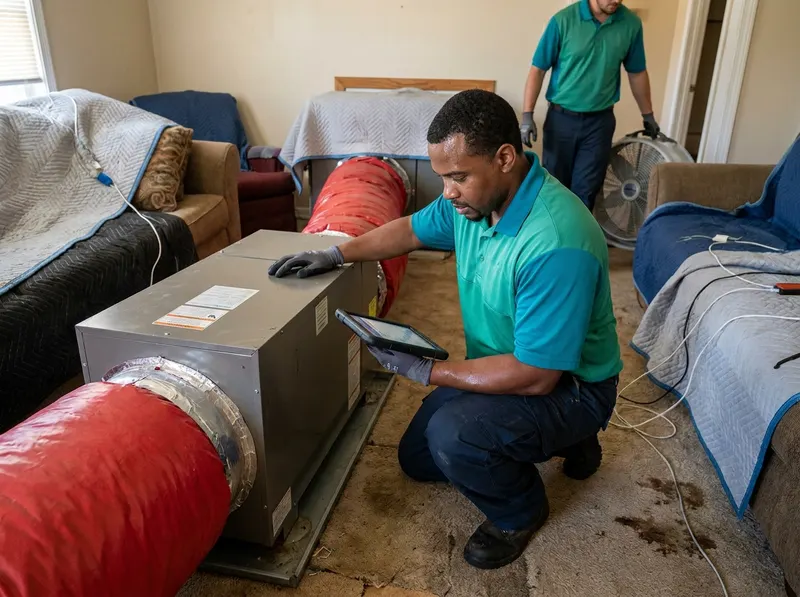
Thermal bed bug eradication elevates ambient indoor temperatures between 120°F and 135°F using industrial forced-air convection heaters, high-output axial air movers, and wireless temperature-monitoring sensors placed throughout cold spots. This controlled temperature envelope denatures essential cellular proteins across all life stages, including egg cases, early-instar nymphs, and reproductive adults buried deep within mattresses, baseboard seams, wall outlets, and deep furniture joints. Non-staining amorphous silica gel is systematically applied to perimeter electrical boxes, under carpet edges, and behind switch plates to establish multi-year desiccant barriers. Structural treatments maintain core target temperatures for a minimum of 4 consecutive hours, ensuring complete thermal penetration through heavy box springs, closet interiors, and dense structural framing.
Get a quote →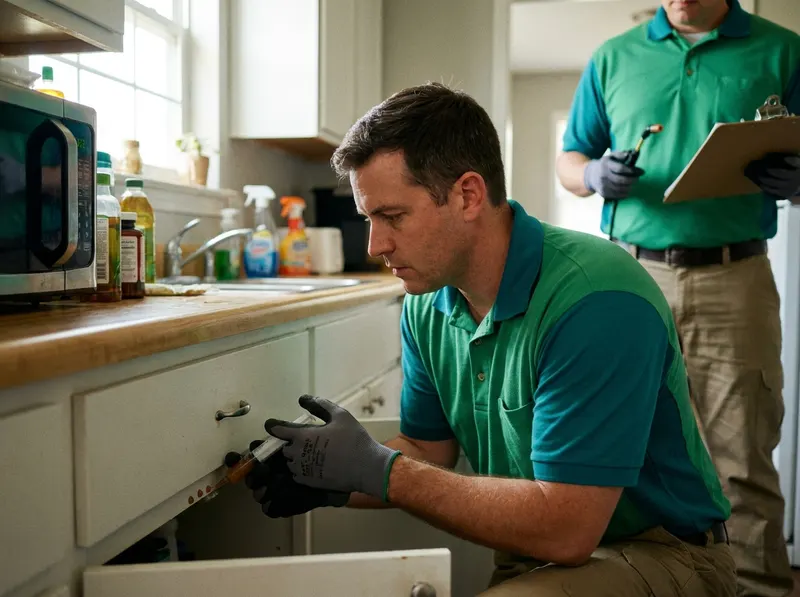
German and American cockroach eradication relies on micro-placed bait gels containing active hydramethylnon, indoxacarb, or dinotefuran paired with synthetic Insect Growth Regulators (IGRs) such as pyriproxyfen. This targeted chemistry halts chitin synthesis during nymph molting cycles while exploiting natural coprophagy and necrophagy to disseminate lethal toxins throughout hidden aggregation harbors behind commercial dishwashers, motor housings, and utility access panels. Precise micro-dots are placed every 12 to 18 inches along interior hinge lines, drawer guides, and undersink plumbing penetrations rather than broadcasting repellent sprays that drive insects deeper into wall cavities. Progress tracking through sticky pheromone monitors quantifies population reduction across a standard 14 to 28 day treatment cycle.
Get a quote →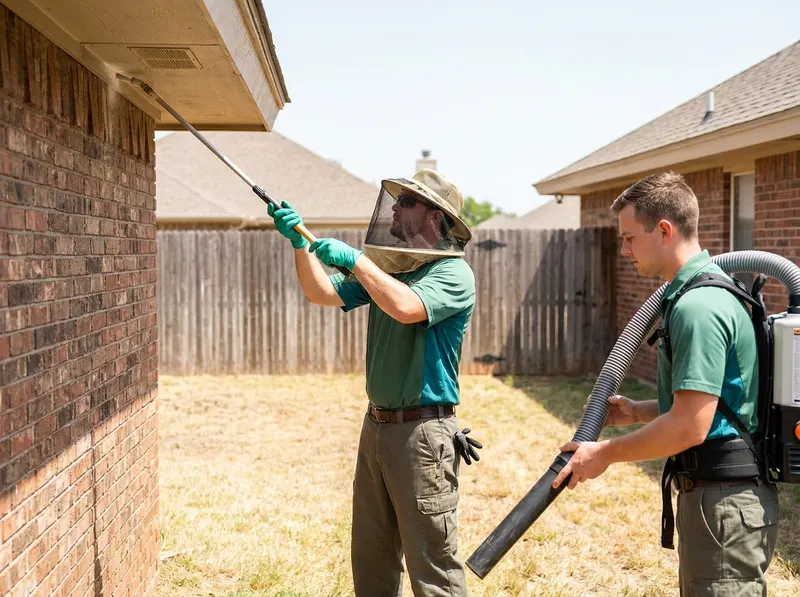
Hornet, paper wasp, and yellowjacket abatement combines high-velocity knockdown aerosols with physical mechanical extraction of exterior subterranean, soffit, and tree-canopy nests. Specialized protective gear and directional aerosol wands allow field technicians to isolate nest entrances, eliminate defensive workers on contact, and physically dislodge paper combs to eliminate pheromone-induced repopulation. Technicians apply long-lasting micro-encapsulated suspensions to structural eaves, fascia boards, shutter frames, and chimney caps to deter future spring queen nesting attempts. Ground nesting sites, such as abandoned rodent burrows infested with aggressive yellowjacket colonies, undergo pressurized insecticidal powder injection followed by tamped soil sealing to neutralize subterranean galleries and prevent territorial re-infestation.
Get a quote →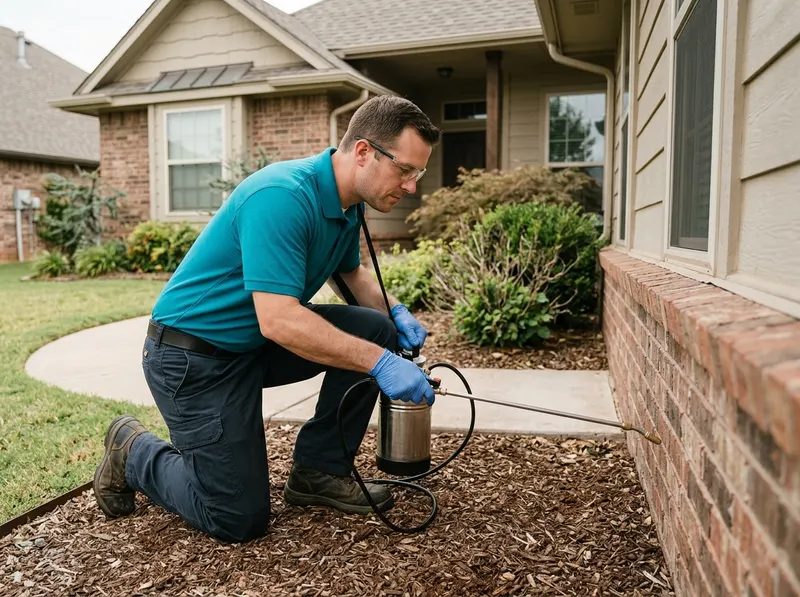
Perimeter arthropod management creates a durable exterior barrier targeting wolf spiders, brown recluse spiders, centipedes, millipedes, and ground beetles around foundation walls and basement walkouts. Micro-encapsulated suspensions adhere to porous brick, concrete block, split-face masonry, and soil transitions, resisting solar breakdown and rain leaching while targeting ground-dwelling arachnids as they cross structural entry thresholds. Technicians apply a continuous protective band measuring 3 feet up the vertical exterior wall and 5 feet outward across the adjacent soil or mulch bed. Interior basements, perimeter sill boxes, and crawlspaces receive focused application of micro-fine dust formulations within structural expansion seams, ensuring migrating predatory arthropods encounter lethal exposure zones.
Get a quote →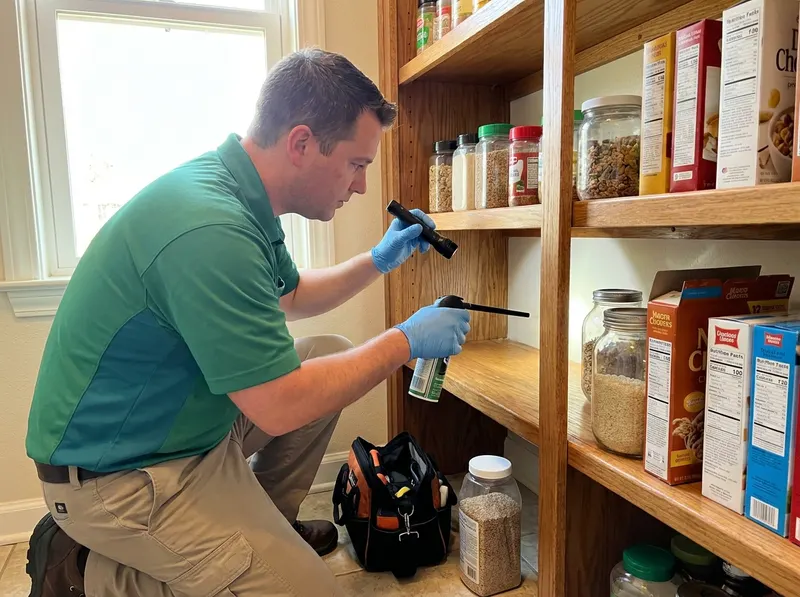
Pantry pest eradication systematically eliminates Indian meal moths, sawtoothed grain beetles, drugstore beetles, and flour weevils from dry food storage cabinets, pantries, and commercial bulk storage areas. Procedures involve systematic pheromone monitoring traps, biological harbor cleaning protocols, and ultra-low-volume crack-and-crevice treatments using botanical pyrethrins that leave no enduring toxic chemical residues in culinary environments. Technicians inspect processed grains, animal feed bags, and cardboard packaging seams to identify primary infested lots for disposal. Secondary structural harborages within shelving brackets, baseboard crevices, and cabinet joints are treated with non-residual contact agents combined with an insect growth regulator to disrupt larval pupation cycles completely.
Get a quote →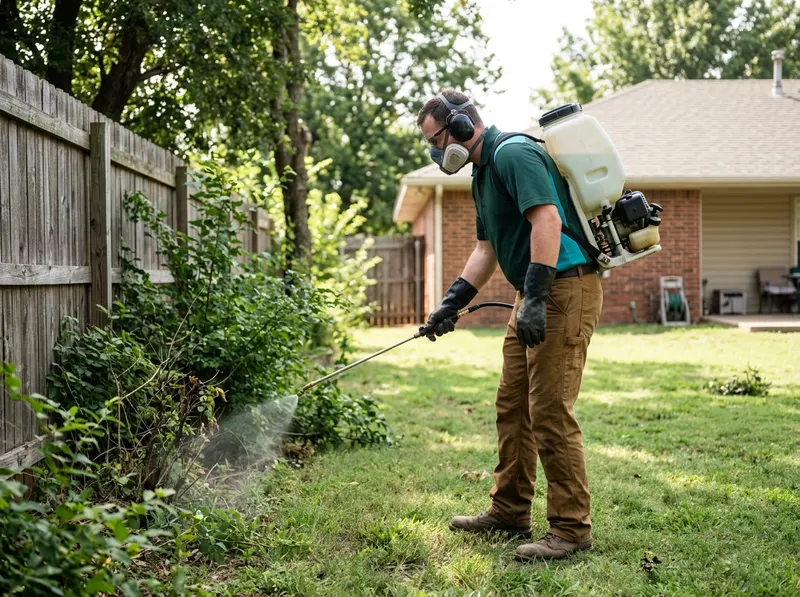
Interior and exterior flea and tick remediation disrupts outdoor breeding grounds and indoor pile carpeting using adulticides blended with juvenile hormone mimics like pyriproxyfen or methoprene. This compound combination stops larval development and causes pupal emergence failure across sub-surface carpeting, pet bedding seams, baseboard joints, and transitional lawn shade lines. Outdoor applications target tall grass margins, leaf litter accumulations under wooden decks, and shaded kennel runs using fine-mist liquid treatments that bond with ground vegetation. Interior applications require a deep vacuuming protocol before and after treatment to stimulate adult emergence from protective pupal cocoons, ensuring maximum contact with the drying chemical barrier.
Get a quote →You get a firm, itemized quote for your pest control service before any work begins, no surprises, no pressure.
Careful prep, tidy work, and a full cleanup when we are done. We treat your home and belongings like our own.
The same trusted, background-checked team from the first call to the final check.
Selecting appropriate intervention protocols depends directly on pest classification, colony maturity, building construction materials, and surrounding environmental moisture levels. If you observe frass, hollowed structural timber, or winged swarmers along window sills, choose specialized wood-destroying organism remediation; this protocol utilizes localized borate applications, non-repellent liquid termiticides, and sub-slab pressure injection rather than superficial perimeter sprays. If your facility exhibits active kitchen trailing lines, moisture-seeking odorous house ants, or pantry beetles, choose interior void dusting combined with juvenile hormone mimics and non-repellent biological baits; this strategy allows foraging workers to transport active agents directly into the parent nest.
If dealing with bed bug infestations across bedding or upholstered furniture, select full-structure thermal heat remediation combined with residual desiccant dusts instead of topical pyrethroid applications alone. If external stinging insects threaten high-traffic entryways, choose high-velocity aerosol knockdown paired with complete physical nest detachment to prevent secondary pheromone recruitment. The fundamental trade-off centers on treatment persistence versus immediate site preparation: non-repellent structural transfer treatments require zero relocation of household goods but take 10 to 21 days to collapse an entire subterranean colony, whereas comprehensive thermal treatments require intensive furniture spacing, heat-sensitive item removal, and 8 hours of site vacancy to yield immediate, single-day mortality across all insect instars.
Furthermore, routine perimeter micro-encapsulated liquid treatments offer continuous seasonal barrier defense against ground beetles and arachnids across 60 to 90 days, yet they do not eliminate pre-existing interior colonies established within uninsulated plumbing chases or subfloor cavities without direct internal void injection.
Every project gets a firm, written price after a free on-site visit. Ranges below for orientation.
Tell us about your pest control service job and we'll send a clear, written quote, usually the same day. Or just call and talk to a real Oklahoma City pro.
(405) 212-1067
Properties throughout Oklahoma City, OH encounter aggressive structural and perimeter insect migration driven by agricultural field drainage patterns and direct proximity to significant aquatic environments, including Berlin Reservoir, Lake Milton State Park, and Meander Creek Reservoir. Saturated soils along the Mill Creek MetroParks Bikeway corridor and the expansive agricultural zones bordering the Canfield Fairgrounds generate elevated carpenter ant foraging pressure and subterranean termite emergence every spring as soil temperatures exceed 55°F. Older residential farmhouses, split-level properties, and commercial outbuildings across the Patmos Road Farmlands and Snodes Corridor require continuous structural perimeter barriers to repel aggressive seasonal migrations of wood-boring insects, field crickets, and ground-dwelling arthropods moving inward during seasonal moisture shifts and fall crop harvests. Foundation designs common along Western Reserve West and the Benton Road Enclave, including sandstone footers, porous concrete blocks, and unvented crawlspaces, are vulnerable to damp-loving subterranean termites that construct mud shelter tubes across foundation surfaces to reach structural sill plates. When ground saturation rises around the Berlin Center Rural Outskirts during early summer storms, perimeter foundation treatments prevent foraging ant colonies from relocating their brood chambers into subfloor voids and interior baseboard tracks. Local commercial warehouses and light industrial complexes situated along the regional transportation arterials also experience localized pressure from stored product pests and invasive beetle species moving along agricultural grain corridors, requiring strict preventive void treatments and continuous pheromone monitoring.
Free estimates for Oklahoma City & the surrounding area.
 Zorevia Insect Specialists