Pantry pest eradication requires an entomological methodology rather than non-specific aerosol spraying. Retail pesticide foggers disperse volatile organic compounds across countertops without reaching the deep…
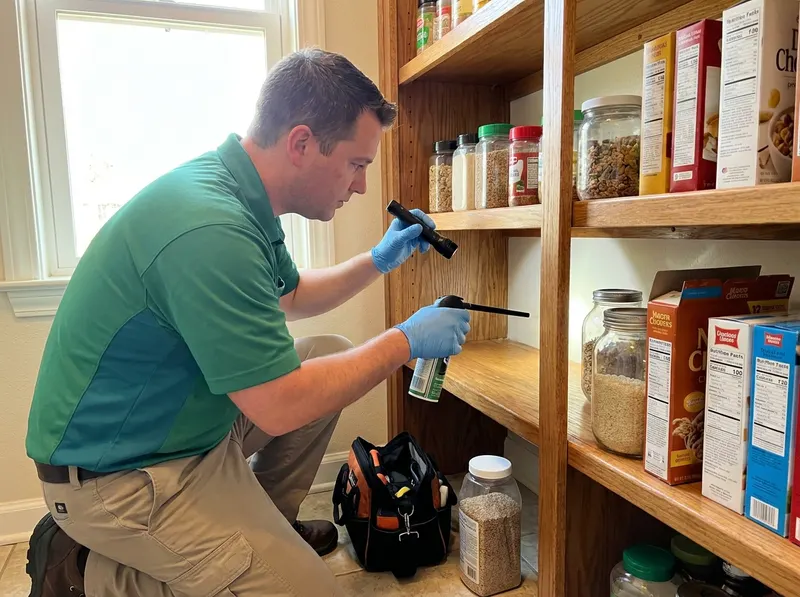
Pantry pest eradication requires an entomological methodology rather than non-specific aerosol spraying. Retail pesticide foggers disperse volatile organic compounds across countertops without reaching the deep shelving seams, cardboard packaging folds, or under-cabinet voids where larvae feed and pupate. For homeowners in Oklahoma City facing active insect sightings in bulk dry goods, dry pet foods, or kitchen cabinets, professional remediation breaks the continuous reproductive cycle of stored-food insects without contaminating food-preparation zones.
Pantry remediation is distinct from general structural perimeter spraying. General pest applications focus on ground-level barriers against crawling exterior invaders, whereas stored product remediation concentrates entirely on indoor cabinet micro-climates, temperature-regulated food storage areas, and grain-based food items. In properties along the Patmos Road Farmlands and the Berlin Center Rural Outskirts, larger bulk-grain storage and open agricultural environments frequently invite Indian meal moths and merchant grain beetles into attached residences. In suburban kitchens near Maple Ridge and the Western Reserve West area, infestations often arrive pre-packaged inside retail birdseed, dry specialty flour, or ornamental Indian corn.
The operational sequence begins with an entity-level isolation: all unsealed dry grains, cereals, nuts, and spices are physically examined under concentrated illumination. Heavily infested materials are bagged airtight for removal. Technicians deploy high-efficiency particulate air (HEPA) vacuum extraction along shelf pin-holes, baseboards, and hinge pockets to capture unhatched egg clusters and pupal webbing. Next, non-repellent, low-toxicity insect growth regulators (IGRs) are applied precisely into perimeter crevices to prevent juvenile larvae from maturing into breeding adults. Properties in the Snodes Corridor and Benton Road Enclave benefit from species-specific synthetic sex pheromone traps placed to monitor flight activity and verify population collapse across the standard 28-day secondary emergence window.
Every job gets a firm, written price after a free on-site visit.
Tell us about your stored product & pantry pest remediation job in Oklahoma City and we'll send a clear, written quote, usually the same day.
 Zorevia Insect Specialists