Carpenter ant infestations across Western Reserve West and the heavily wooded tracts along the Mill Creek MetroParks Bikeway originate when parent colonies in decayed hardwood hollows disperse satellite nests into…
Carpenter ant infestations across Western Reserve West and the heavily wooded tracts along the Mill Creek MetroParks Bikeway originate when parent colonies in decayed hardwood hollows disperse satellite nests into domestic moisture corridors. Unlike subterranean termites that ingest cellulose, carpenter ants excavate smooth, sandpaper-like galleries within structural 2x4 framing, foam insulation, and rim joists, ejecting fine wood shavings known as frass through exit slits. Over-the-counter pyrethroid contact sprays disperse these satellite colonies deeper into interior cavities via protective bud-off behaviors, rendering surface spraying counterproductive. Clinical remediation relies on non-repellent transfer insecticides and low-pressure pressurized micro-injections directly into wall voids behind switch plates, baseboards, and plumbing stacks where acoustic probes identify active activity.
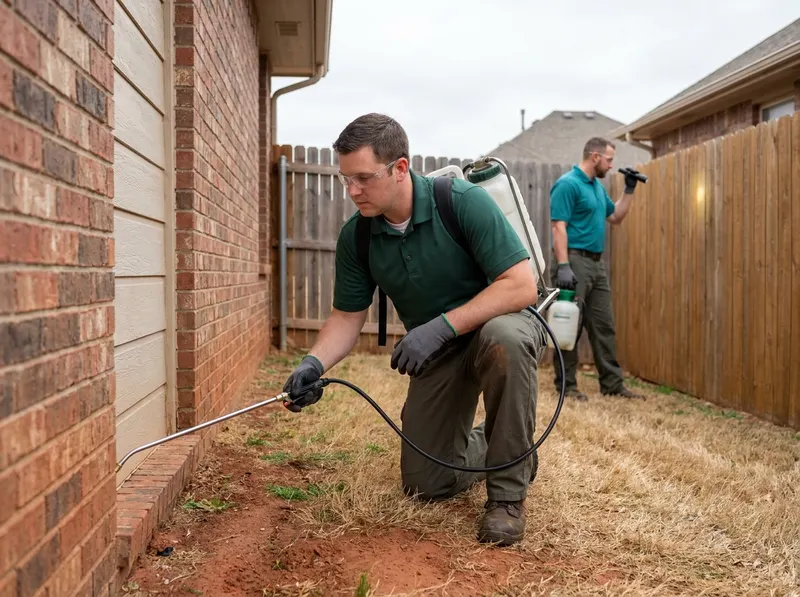
Properties bordering Lake Milton State Park, Berlin Reservoir, and the Meander Creek Reservoir exhibit high risk due to elevated ground humidity and proximity to dense shoreline tree canopies. Exterior remediation establishes a 3-foot vertical and 10-foot horizontal liquid soil barrier from the foundation footing outward, severing foraging trails that access soffits via overhanging branches or utility lines. In agricultural properties throughout the Snodes Corridor, Patmos Road Farmlands, and the Berlin Center Rural Outskirts, outbuildings and adjacent timber cords require perimeter systemic saturation to halt constant re-infestation vectors. The trade-off between localized void injections and full perimeter liquid treatments rests on colony maturation: localized drilling addresses acute interior winter populations, whereas perimeter soil saturation protects long-term foundation perimeters but requires clear, unfrozen soil conditions.
Technicians dispatched to the Benton Road Enclave and Maple Ridge arrive in fully decaled identification units carrying calibrated micro-injector rigs, borescopes, and EPA-registered non-repellent formulations safe for interior utility chases once dried. For standard residential foundations, remediation follows four consecutive steps: (1) acoustic and thermal boundary detection to pinpoint gallery locations, (2) mechanical precision port drilling into impacted stud bays, (3) dry void treatment delivery, and (4) unbroken external foundation band application. Continuous physical barriers require structural clearance; homeowners must prune vegetative contacts 24 inches back from exterior walls to prevent overhead bridging.
Every job gets a firm, written price after a free on-site visit.
Tell us about your carpenter ant void & perimeter remediation job in Oklahoma City and we'll send a clear, written quote, usually the same day.
 Zorevia Insect Specialists