Targeted insect eradication requires addressing the specific biology of stinging insects rather than distributing broad-spectrum barrier chemicals across turf. Paper wasps (Polistes) construct open-comb hexagonal nests…
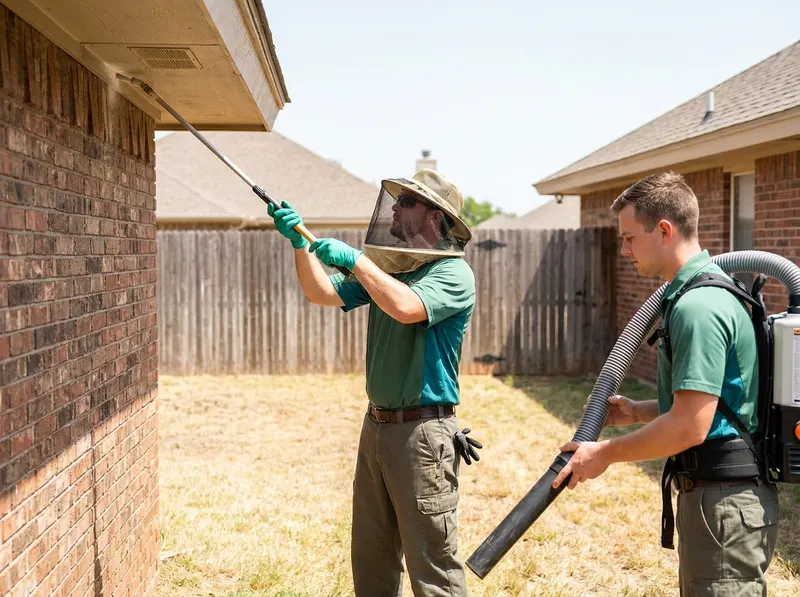
Targeted insect eradication requires addressing the specific biology of stinging insects rather than distributing broad-spectrum barrier chemicals across turf. Paper wasps (Polistes) construct open-comb hexagonal nests beneath open eaves and porch roofs, whereas bald-faced hornets (Dolichovespula maculata) build enclosed cellulose structures that can exceed 14 inches in diameter by late August. In residential corridors like Maple Ridge and Western Reserve West, yellowjackets frequently colonize soffits, wall voids, and attic insulation by exploiting unsealed exterior weep screeds or deteriorated fascia boards. Hardware-store pyrethroid sprays often trigger rapid dispersion: when homeowner sprays strike yellowjackets inside an exterior opening, the agitated colony typically chews inward through gypsum wallboard into interior living areas rather than retreating outside.
Cavity-bound colonies in the Benton Road Enclave and Snodes Corridor require acoustic location and thermal imaging to isolate the nest mass behind drywall before introducing concentrated desiccant dusts or micro-encapsulated formulations. Physical extraction of the comb is mandatory: leaving dead larvae and unhatched pupae inside a sealed wall void creates secondary infestations of carpet beetles and flesh flies within 7 to 10 days, while unneutralized aggregation pheromones attract fertile queens to the exact same wall stud during the following spring cycle.
Rural acreage properties across the Patmos Road Farmlands and Berlin Center Rural Outskirts frequently present underground colonies in abandoned rodent burrows near the margins of Lake Milton State Park and Berlin Reservoir. Subterranean extraction utilizes targeted sub-surface liquid injections that saturate the brood chambers without contaminating regional runoff or surrounding livestock pasturage. Standard service protocol involves four sequential stages: visual identification of the insect species at the flight portal, thermal evaluation of the structural substrate, localized chemical knockdown, and structural detachment of the physical nest envelope. In situations where nests rest inside active electrical junction boxes or behind historic brick masonry along the Mill Creek MetroParks Bikeway boundary, chemical treatment precedes mechanical closure without destructive wall breaches.
Every job gets a firm, written price after a free on-site visit.
Tell us about your stinging insect nest extraction job in Oklahoma City and we'll send a clear, written quote, usually the same day.
 Zorevia Insect Specialists